Humble Inside: A Display Font That Adds Personality to Branding
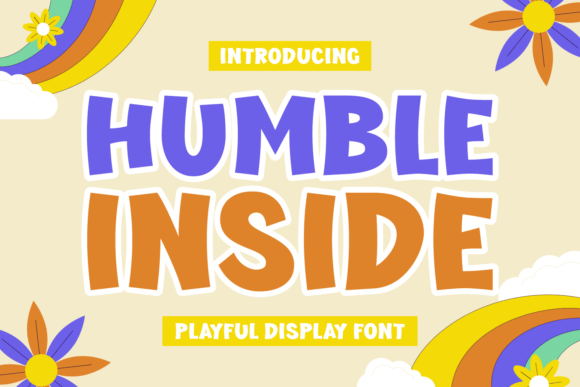
When I first opened my brand board for a new project—a cozy café called "Morning Brew"—I knew the font choice would be crucial. It had to feel warm, inviting, and just a little bit whimsical. That’s when I stumbled upon Humble Inside, a display font that immediately stood out with its charming elegance and modern simplicity.
Humble Inside in Logo Design for a Cozy Café
Humble Inside quickly became the star of my logo mockups. Its clean lines and soft curves gave the café a sense of innocence and approachability, exactly what the owner was looking for. As a display font, it worked perfectly as the main typeface in the logo, while a complementary sans serif font handled the supporting text like menu items and hours of operation.
I tested it on several variations—bold, light, and even italic—and found that Humble Inside maintained its readability even at smaller sizes. It wasn’t too ornate, which made it ideal for both digital and print applications. The result? A logo that felt personal yet professional, perfect for a small business aiming to stand out in a competitive market.
Humble Inside for Packaging and Product Labels
Next up was the packaging design. The café wanted to create a line of branded coffee mugs and reusable tumblers. I used Humble Inside on the front labels, pairing it with a minimalist sans serif for the product names and pricing. The contrast between the two fonts created a nice visual hierarchy without overwhelming the eye.
The font’s modern flair balanced the café’s rustic theme, making the products look both stylish and trustworthy. I also noticed how well Humble Inside scaled across different formats—from a tiny label sticker to a full-sized mug wrap. It never lost its charm or clarity, which is essential when designing for multiple platforms.
How Humble Inside Enhances Brand Perception
One thing I learned early on was how much a font can influence brand perception. Humble Inside brought a sense of warmth and sincerity to the café’s identity. It felt like the kind of font you’d see on a hand-painted sign, but with a polished edge that appealed to a broader audience.
This duality—innocence with a modern twist—helped bridge the gap between the café’s local, community-focused vibe and its growing online presence. It wasn’t just about looking good; it was about feeling right. And that’s something I think every designer should consider when choosing a typeface for a brand.
Humble Inside in Social Media Graphics and Website Headers
As part of the branding package, I needed to ensure consistency across all digital channels. Humble Inside came into play again when designing social media graphics and website headers. For Instagram posts, I used it in headlines paired with a script font for a more handwritten feel. The combination added a touch of personality without sacrificing professionalism.
On the homepage hero section, I kept it simple—just Humble Inside in a large, centered format. It drew attention without being distracting, which is key for web design. I also made sure to check the font’s multilingual support and file formats to ensure compatibility with the café’s website builder and marketing tools.
Practical Tips for Using Humble Inside in Client Work
If you're considering using Humble Inside in your next client project, here are a few things to keep in mind:
- Test it in different weights and styles before finalizing your brand system.
- Pair it with a complementary font to maintain balance and readability.
- Ensure it works across all platforms—web, print, and social media.
- Check the licensing to make sure it's suitable for commercial use.
It’s always a good idea to experiment with how the font looks on various surfaces—like shop signs, business cards, and packaging. Sometimes, a font that looks great on a screen doesn’t translate as well to print, and vice versa.
Humble Inside for Editorial Design and Marketing Materials
For the café’s monthly newsletter and in-store flyers, I used Humble Inside as a headline font. It gave the content a friendly, approachable tone that matched the café’s overall brand voice. When paired with a clean sans serif for body text, it helped guide the reader’s eye through the information smoothly.
In printed marketing materials, like posters and event flyers, the font’s boldness made it stand out against background images. It was subtle enough not to overpower the visuals but strong enough to communicate the message clearly.
What I loved most was how versatile Humble Inside was—it didn’t feel limited to one style or application. Whether it was on a logo, a website, or a flyer, it consistently delivered the right tone and impact.
Using Humble Inside in this project reminded me why choosing the right font matters. It’s not just about aesthetics; it’s about creating a cohesive and meaningful brand experience. And that’s something every designer should strive for.