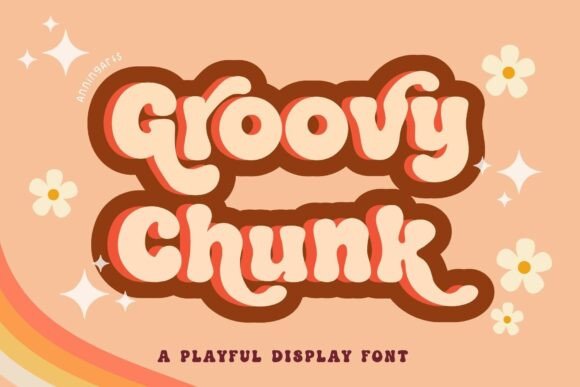
Groovy Chunk Display Font for Retro Web Design
Use Cases for Groovy Chunk on E-commerce Sites
- Product title headers on category pages
- Promotional banners during flash sales
- Call-to-action buttons with dynamic copy
- Customized section headings for featured items
Best Practices for Using Groovy Chunk on Blogs
When integrating Groovy Chunk into blog headers, ensure that the font size and spacing are optimized for readability across devices. On mobile screens, consider reducing the weight slightly if the font appears too heavy. Additionally, use Groovy Chunk sparingly—reserving it for main titles rather than subheadings or body text—to maintain a clear visual hierarchy.
Tips for Using Groovy Chunk in Advertising
- Limit the use of alternate characters to avoid visual clutter.
- Ensure sufficient contrast between the font and background colors.
- Test the font on different screen sizes before finalizing designs.
- Pair Groovy Chunk with complementary fonts for better legibility in longer texts.
How to Integrate Groovy Chunk Into Your Portfolio
Consider using Groovy Chunk for your site's navigation menu, project titles, and taglines. This ensures that your portfolio remains visually cohesive while allowing your work to take center stage. For best results, pair Groovy Chunk with a modern sans serif font for descriptions and other supporting text.
Using Groovy Chunk to Enhance Learning Experiences
When applying Groovy Chunk to educational content, ensure that the font doesn't compromise readability. Use it primarily for headlines and callouts, and always test how it looks against various backgrounds and color schemes. A consistent and thoughtful approach will help maintain a professional yet engaging learning environment.