Bold and Thin: A Modern Display Typeface for Striking Brand Identities
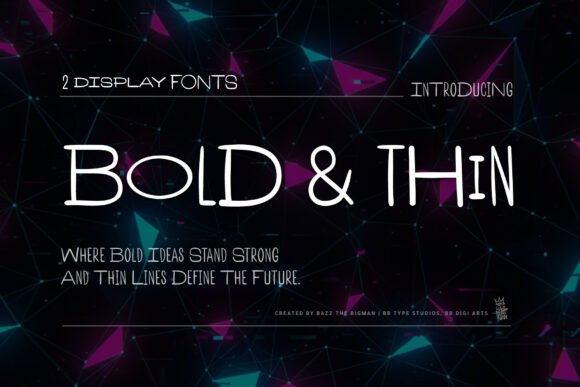
I remember staring at a blank brand board for a new boutique skincare line, the cursor blinking in the center of the canvas. The client wanted something that felt luxurious yet modern, a visual identity that could stand out on crowded shelves without shouting. I opened my font library, scrolling past the usual suspects, until I landed on Bold and Thin. It was an immediate "aha" moment. This isn't just another typeface; it is a contemporary display font that deftly melds striking, bold strokes with the elegance of whisper-thin lines. As I dragged the letters onto the mockup, the tension between strength and delicacy created a sublime equilibrium between might and meticulous detail that I had been searching for.
Bold and Thin for Logo Design and Minimalist Brand Identity
When testing Bold and Thin as a primary logo font, the results were surprisingly versatile for a display typeface. In my recent project for a local artisan bakery, I used the heavy weights to anchor the main wordmark while utilizing the hairline strokes for subtle taglines. The contrast creates an instant visual hierarchy that guides the eye exactly where you want it. Unlike standard sans-serif fonts that can sometimes feel flat or corporate, this font introduces a dynamic rhythm. The juxtaposition of the thick vertical bars against the fragile crossbars gives the logo a sense of movement and sophistication. It works exceptionally well when paired with a clean serif font for secondary information, creating a balanced composition that feels both editorial and approachable. For any designer looking to build a premium brand identity, this font offers a distinct personality that avoids the generic look of free alternatives.
Bold and Thin on Packaging Mockups and Product Labels
The true test of any fonts collection is how they perform in real-world applications, specifically on physical packaging. I applied Bold and Thin to a series of product labels for a handmade soap line, and the impact was undeniable. The bold strokes command attention from a distance, perfect for retail shelving, while the thin lines add a touch of refinement that suggests high quality and care. When printed on matte black cardstock with gold foil accents, the contrast between the font's weight and the material texture elevated the perceived value of the product immediately. However, there are nuances to consider; the extreme thinness requires careful kerning and sizing. If you reduce the text too small, those delicate lines can disappear or become jagged during the printing process. For large-format packaging, headers, and prominent labels, it shines, but it requires precision in the production phase to maintain its elegant integrity.
Bold and Thin for Web Design Headers and Social Media Graphics
Moving into digital spaces, Bold and Thin serves as an exceptional tool for web design headers and social media layouts where visual impact is paramount. On a homepage hero section, the font acts as a powerful hook, drawing users in with its dramatic character. I recently tested it on an Instagram post layout for a creative studio, using the bold variants for the headline and the thin variants for the supporting text. The result was a clean, modern aesthetic that stopped the scroll. The font's unique structure allows it to break up white space effectively without feeling cluttered. It pairs beautifully with modern typography systems, particularly when mixed with a neutral sans-serif for body copy to ensure readability. While it is not suitable for long-form content, it excels as a decorative font for short phrases, pull quotes, and call-to-action buttons. Its ability to convey mood through stroke variation makes it a standout choice for digital marketing assets that need to communicate style and substance simultaneously.
Bold and Thin for Editorial Design and Creative Typography Projects
In the realm of editorial design, Bold and Thin brings a fresh perspective to magazine covers and feature spreads. The interplay of the heavy and light elements creates a natural flow that mimics the rhythm of high-end fashion photography. I found it particularly effective when used for drop caps or oversized initial letters in articles about design, art, or lifestyle. The font instills a sense of authority while remaining playful enough for creative columns. It is important to note that this is a display font, meaning it is best utilized for headlines, titles, and short captions rather than body text. Attempting to use it for paragraphs would compromise readability and fatigue the reader. Instead, treat it as an accent font that highlights key concepts. When combined with a classic serif font for the main article text, the contrast creates a sophisticated typographic system that feels curated and intentional. This versatility makes it a valuable asset for publishers and content creators looking to elevate their visual storytelling.
Bold and Thin Font Pairing and Technical Considerations
Selecting the right companion typeface is crucial when integrating Bold and Thin into a comprehensive design system. Because the font itself carries so much visual weight and stylistic flair, it pairs best with understated typefaces that do not compete for attention. A simple sans-serif font like Helvetica Neue or a classic serif font like Garamond can provide the necessary grounding for the more expressive elements of this font. When working on a business card or a flyer, I recommend using the bold weight for the name or company title and the thin weight for contact details, ensuring the information remains legible even at small sizes. Before committing to a final design, always test the font across different mediums and screen resolutions. Check the included styles, alternates, and ligatures to see if the set supports your specific language needs. Remember to review commercial font licensing carefully before using the font in client work, merchandise, or print-on-demand products to ensure you are compliant with all usage rights. With the right pairing and technical preparation, Bold and Thin becomes more than just a font; it becomes a cornerstone of a memorable and professional design strategy.