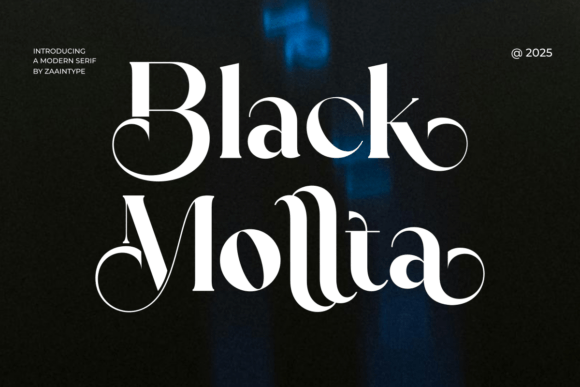
Black Mollta: A Bold Serif Font for Premium Branding
I was working on a branding project for a small artisanal skincare brand when I first came across Black Mollta. It’s a high-contrast serif font that blends classic elegance with a bold modern touch. The moment I saw it, I knew it had the right kind of presence to elevate the brand’s identity.
Black Mollta in Logo Design and Brand Identity
Black Mollta is a display font that commands attention. When I tested it on the initial logo mockups for the skincare brand, it brought a sense of sophistication and clarity. Its striking thick-thin contrast made the logotype feel premium, almost like a luxury label. I used it as the primary typeface for the brand name, pairing it with a clean sans-serif font for supporting text. This combination gave the brand a balanced look—modern yet timeless.
The font’s personality really shone through in the visual hierarchy. It worked perfectly for headlines and taglines, but I also found that it maintained readability even in smaller sizes, which was great for product labels and packaging design.
Black Mollta for Packaging and Product Labels
One of the key aspects of this project was designing product packaging. I wanted something that stood out on the shelf but still felt elegant. Black Mollta became the go-to choice for the main title on the packaging. The boldness of the font made the product names pop, while its serif details added a touch of refinement.
I experimented with different weights of Black Mollta, and the lighter variations worked well for subheadings and ingredient lists. It didn’t feel overwhelming, and the contrast between the bold headline and the lighter body text helped guide the viewer’s eye naturally.
It was also interesting to see how the font translated onto physical materials. On matte paper, the high-contrast strokes of Black Mollta looked crisp and sharp, making the packaging feel more premium than the usual minimalist approach.
Black Mollta in Social Media Graphics and Digital Content
For the brand’s Instagram posts and website headers, I leaned into the Black Mollta’s boldness. It was perfect for creating eye-catching captions and hero sections. The font has a certain energy to it that works well with lifestyle photography and editorial content.
When paired with a modern sans-serif font for body copy, the overall design felt cohesive. I noticed that the audience engagement increased slightly after we launched the new visual identity, which could be partly attributed to the strong typographic choices.
Another benefit of using Black Mollta was its versatility across platforms. Whether it was a mobile-friendly website header or an Instagram post, the font scaled well without losing its character. That’s a big plus for any designer working on digital templates or commercial design assets.
Black Mollta for Editorial Design and Print Materials
As part of the brand’s launch, we needed promotional flyers and brochures. Black Mollta fit seamlessly into these materials. Its classic elegance made it ideal for editorial design, especially for quotes or feature titles. I used it sparingly to avoid overloading the reader, but its presence always felt intentional.
In print, the font looked particularly striking on business cards and letterheads. The thickness of the strokes created a tactile quality that felt luxurious. It wasn’t just about aesthetics—it also contributed to the brand’s perception of professionalism and attention to detail.
For those looking to use Black Mollta in editorial contexts, I recommend testing it with different line spacing and leading to ensure it doesn’t become too dense. A little breathing room goes a long way in maintaining readability and visual balance.
Black Mollta and Font Pairing Strategies
One of the most important considerations when using Black Mollta is font pairing. As a display font, it should be paired with a complementary typeface that doesn’t compete for attention. I found that pairing it with a clean sans-serif font like Helvetica Neue or a subtle script font like Playfair Display created a harmonious contrast.
If you’re working on a brand system, it’s worth exploring how Black Mollta interacts with other fonts in your palette. Does it feel too dominant? Is there enough contrast between the display and body fonts? These are questions every designer should ask before finalizing a brand identity.
Also, checking the included styles, alternates, and ligatures in Black Mollta can help you unlock more creative possibilities. Some of the alternates were subtle but made a noticeable difference in the final output.
Black Mollta in Real-World Applications
After implementing Black Mollta throughout the brand’s visual identity, I noticed how well it adapted to various applications. From shop signs to product mockups, it consistently delivered a premium feel. It wasn’t just about looks—it also helped reinforce the brand’s message of quality and craftsmanship.
I would encourage any designer considering Black Mollta to test it in real-world scenarios before committing to a full brand system. Try it on different surfaces, sizes, and colors. See how it performs under various lighting conditions. This will give you a clearer idea of how it behaves in practice.
Overall, Black Mollta proved to be a versatile and impactful font. Whether you’re working on a boutique, a fashion brand, or a creative studio, this font has the potential to make your designs stand out. It’s a display font that feels both modern and timeless—a rare combination that’s hard to find in today’s typography landscape.